BOOKS REVIEWED
The Historical Association of Tobyhanna Township Book Club meets regularly to talk about books of local interest.
Here are reviews of HAAT Book Club books.
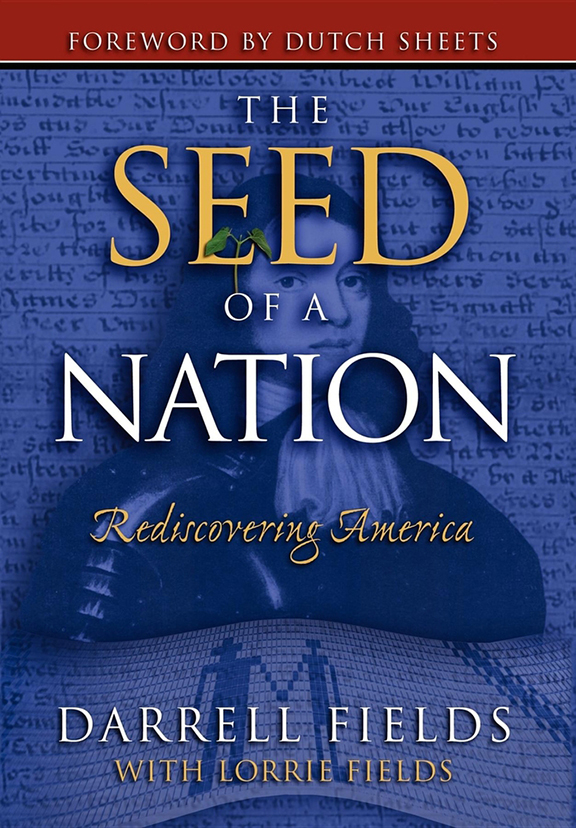
THE SEED OF A NATION: REDISCOVERING AMERICA
By Darrell and Lorrie Fields | 2007 | Paperback 6x9 in | 276 pages or Kindle edition
Morgan James Publishing | ISBN 978-1614482406
“The Seed of a Nation: Rediscovering America by Darrell and Lorrie Fields is an ambitious and thought-provoking examination of William Penn’s vision for Pennsylvania and its influence on the foundations of the United States.
Blending history, faith, politics, and moral reflection, the book argues that Penn’s “Holy Experiment” of religious liberty, peaceful coexistence, and covenant-based government played a far greater role in shaping America than is often acknowledged in traditional historical narratives.
One of the book’s greatest strengths is its passionate reassessment of William Penn. The Fieldses portray Penn not simply as the founder of Pennsylvania, but as a visionary whose ideas about tolerance, liberty, and governance helped establish principles later embedded in the American system of government. The authors emphasize Penn’s relatively peaceful relationship with Native Americans and his commitment to religious freedom, themes that run throughout the narrative.
The writing is accessible and deeply earnest, making the work appealing to readers interested in Pennsylvania history, early American history, Christian history, and civic ideals. The authors clearly seek not only to recount historical events, but also to encourage reflection on America’s moral and spiritual direction. Their argument that the nation’s future depends upon confronting historical injustices and rediscovering foundational principles gives the book a contemporary relevance beyond its historical subject matter.
The book is particularly compelling in its discussion of broken treaties and relationships with Indigenous peoples. The Fieldses present these issues as central to understanding America’s moral struggles and unfinished responsibilities. Their emphasis on reconciliation and historical accountability gives the narrative emotional weight and distinguishes it from more conventional biographies of Penn.
At times, however, the book leans more toward inspirational and spiritual interpretation than strictly academic history. It feels more advocacy-driven at times, especially the last third of the book.
Overall, “The Seed of a Nation” is a compelling and heartfelt work that challenges readers to reconsider the origins of American liberty through the legacy of William Penn and Pennsylvania’s early history. Darrell and Lorrie Fields successfully combine historical narrative with moral reflection, creating a book that is both educational and inspirational for those interested in the ideals and contradictions that shaped America.
More information …
By Darrell and Lorrie Fields | 2007 | Paperback 6x9 in | 276 pages or Kindle edition
Morgan James Publishing | ISBN 978-1614482406
“The Seed of a Nation: Rediscovering America by Darrell and Lorrie Fields is an ambitious and thought-provoking examination of William Penn’s vision for Pennsylvania and its influence on the foundations of the United States.
Blending history, faith, politics, and moral reflection, the book argues that Penn’s “Holy Experiment” of religious liberty, peaceful coexistence, and covenant-based government played a far greater role in shaping America than is often acknowledged in traditional historical narratives.
One of the book’s greatest strengths is its passionate reassessment of William Penn. The Fieldses portray Penn not simply as the founder of Pennsylvania, but as a visionary whose ideas about tolerance, liberty, and governance helped establish principles later embedded in the American system of government. The authors emphasize Penn’s relatively peaceful relationship with Native Americans and his commitment to religious freedom, themes that run throughout the narrative.
The writing is accessible and deeply earnest, making the work appealing to readers interested in Pennsylvania history, early American history, Christian history, and civic ideals. The authors clearly seek not only to recount historical events, but also to encourage reflection on America’s moral and spiritual direction. Their argument that the nation’s future depends upon confronting historical injustices and rediscovering foundational principles gives the book a contemporary relevance beyond its historical subject matter.
The book is particularly compelling in its discussion of broken treaties and relationships with Indigenous peoples. The Fieldses present these issues as central to understanding America’s moral struggles and unfinished responsibilities. Their emphasis on reconciliation and historical accountability gives the narrative emotional weight and distinguishes it from more conventional biographies of Penn.
At times, however, the book leans more toward inspirational and spiritual interpretation than strictly academic history. It feels more advocacy-driven at times, especially the last third of the book.
Overall, “The Seed of a Nation” is a compelling and heartfelt work that challenges readers to reconsider the origins of American liberty through the legacy of William Penn and Pennsylvania’s early history. Darrell and Lorrie Fields successfully combine historical narrative with moral reflection, creating a book that is both educational and inspirational for those interested in the ideals and contradictions that shaped America.
More information …
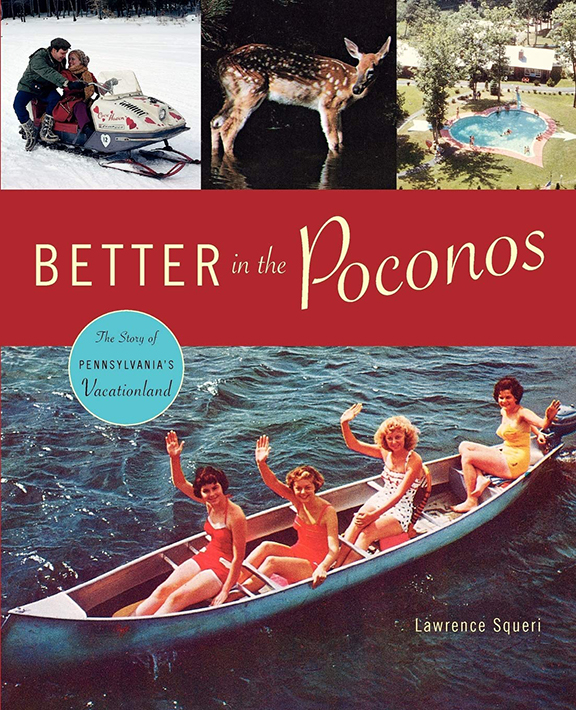
BETTER IN THE POCONOS: THE STORY OF PENNSYLVANIA’s VACATIONLAND
By Lawrence Squeri | 2018 | Paperback 7.5 x 9.25 in | 296 pages
Penn State University Press | ISBN 978-0271028507
“Better in the Poconos: The Story of Pennsylvania’s Vacationland” by Lawrence Squeri is an outstanding and richly detailed history of the Pocono Mountains tourism industry and the people who helped shape northeastern Pennsylvania into one of America’s most recognizable vacation destinations. The book traces the development of the Poconos from a rugged 19th-century wilderness retreat into the famed honeymoon capital and family resort region known throughout the country.
One of the book’s greatest strengths is Squeri’s ability to combine social history, business history, and cultural storytelling into a highly readable narrative. He carefully documents how the region continually reinvented itself to meet changing tastes and travel trends. From Victorian-era hotels and sporting camps to ethnic resorts, honeymoon hideaways, ski lodges, and waterpark destinations, the book illustrates how adaptability became the key to the Poconos’ survival and success.
Squeri also excels in bringing the human side of the Pocono story to life. Resort owners, workers, entertainers, honeymooners, immigrants, and tourists all play important roles in the narrative. The book explores the rise of Jewish resorts, labor retreats such as Tamiment, and famous romantic destinations that helped define the region’s image during the mid-twentieth century.
Particularly fascinating is the discussion of the honeymoon industry and the innovations that made the Poconos famous worldwide. Squeri explains how entrepreneurs transformed the region into a symbol of romance through imaginative marketing and attractions such as heart-shaped bathtubs and champagne-glass whirlpools associated with Morris Wilkins.
The book is extensively researched and filled with historic photographs, firsthand recollections, and colorful anecdotes that make the history feel vivid and personal. Despite its scholarly depth, the writing remains accessible and engaging, making it enjoyable for both academic readers and casual lovers of Pocono history. Squeri avoids nostalgia alone, instead presenting a balanced examination of economic shifts, competition from other resort regions, and the challenges faced by the tourism industry over time.
At times, the sheer amount of detail can feel dense, especially for readers seeking a lighter travel history. However, that depth is also what makes the book such an important contribution to Pennsylvania regional history. It serves not only as a history of tourism, but also as a broader portrait of changing American leisure culture throughout the 19th and 20th centuries
Overall, “Better in the Poconos” is an essential work for anyone interested in the Pocono Mountains, Pennsylvania history, tourism history, or American popular culture. Lawrence Squeri successfully captures both the romance and the reinvention that defined the region for generations, preserving the story of a vacationland that became deeply woven into the memories of millions of visitors.
More information …
By Lawrence Squeri | 2018 | Paperback 7.5 x 9.25 in | 296 pages
Penn State University Press | ISBN 978-0271028507
“Better in the Poconos: The Story of Pennsylvania’s Vacationland” by Lawrence Squeri is an outstanding and richly detailed history of the Pocono Mountains tourism industry and the people who helped shape northeastern Pennsylvania into one of America’s most recognizable vacation destinations. The book traces the development of the Poconos from a rugged 19th-century wilderness retreat into the famed honeymoon capital and family resort region known throughout the country.
One of the book’s greatest strengths is Squeri’s ability to combine social history, business history, and cultural storytelling into a highly readable narrative. He carefully documents how the region continually reinvented itself to meet changing tastes and travel trends. From Victorian-era hotels and sporting camps to ethnic resorts, honeymoon hideaways, ski lodges, and waterpark destinations, the book illustrates how adaptability became the key to the Poconos’ survival and success.
Squeri also excels in bringing the human side of the Pocono story to life. Resort owners, workers, entertainers, honeymooners, immigrants, and tourists all play important roles in the narrative. The book explores the rise of Jewish resorts, labor retreats such as Tamiment, and famous romantic destinations that helped define the region’s image during the mid-twentieth century.
Particularly fascinating is the discussion of the honeymoon industry and the innovations that made the Poconos famous worldwide. Squeri explains how entrepreneurs transformed the region into a symbol of romance through imaginative marketing and attractions such as heart-shaped bathtubs and champagne-glass whirlpools associated with Morris Wilkins.
The book is extensively researched and filled with historic photographs, firsthand recollections, and colorful anecdotes that make the history feel vivid and personal. Despite its scholarly depth, the writing remains accessible and engaging, making it enjoyable for both academic readers and casual lovers of Pocono history. Squeri avoids nostalgia alone, instead presenting a balanced examination of economic shifts, competition from other resort regions, and the challenges faced by the tourism industry over time.
At times, the sheer amount of detail can feel dense, especially for readers seeking a lighter travel history. However, that depth is also what makes the book such an important contribution to Pennsylvania regional history. It serves not only as a history of tourism, but also as a broader portrait of changing American leisure culture throughout the 19th and 20th centuries
Overall, “Better in the Poconos” is an essential work for anyone interested in the Pocono Mountains, Pennsylvania history, tourism history, or American popular culture. Lawrence Squeri successfully captures both the romance and the reinvention that defined the region for generations, preserving the story of a vacationland that became deeply woven into the memories of millions of visitors.
More information …
THE TRACH-HUNSICKER HOUSE AND A FAMOUS POTTER
By Dr. Sara Cornell | 2025 | Paperback 6 x 9 in | 170 pages
Independently Published | ISBN 979-8309889969
The Trach-Hunsicker House and a Famous Potter, Second Edition, by Dr. Sara Cornell is a work of local history that successfully combines architectural heritage, genealogy, and the story of an important regional craftsman into a compelling narrative centered on Hamilton Square in Monroe County, Pennsylvania. The book examines the historic Trach-Hunsicker House while also exploring the legacy of the famous potter connected to the property and the broader cultural landscape of the region.
One of the book’s greatest strengths is its attention to preserving local history that might otherwise fade from public memory. Cornell demonstrates a passion for Monroe County’s historic structures and families, carefully documenting the architectural details and historical significance of the old stone house. Features such as the “funeral door,” original fireplaces, and stained-glass fanlight are described in ways that help readers appreciate both the craftsmanship and traditions associated with early Pennsylvania homes.
The book also excels in connecting the home to the life and work of the potter associated with the property. Rather than presenting the house as an isolated structure, Cornell places it within the larger context of regional craftsmanship, settlement patterns, and everyday life in early northeastern Pennsylvania. This gives the narrative depth and makes the work valuable not only to local historians, but also to readers interested in folk art, early American pottery, and Pennsylvania German culture.
Cornell’s writing style is accessible and enthusiastic, making the book approachable for both casual readers and serious researchers. The work reads as both a historical study and a tribute to the families and traditions that shaped Hamilton Square. The inclusion of photographs, historical details, and architectural observations strengthens the reader’s connection to the subject matter.
The book is more about commemorative local history than academic, but this is due to her having grown up in the house, painstakingly remodeled by her father. However, the author’s evident dedication to preserving regional heritage gives the work authenticity and charm.
Overall, The Trach-Hunsicker House and a Famous Potter is a worthwhile contribution to Monroe County history and an important effort in documenting local heritage. Dr. Sara J. Cornell successfully preserves the story of a historic home and the people connected to it, offering readers an informative and heartfelt glimpse into Pennsylvania’s architectural and cultural past.
More information …
By Dr. Sara Cornell | 2025 | Paperback 6 x 9 in | 170 pages
Independently Published | ISBN 979-8309889969
The Trach-Hunsicker House and a Famous Potter, Second Edition, by Dr. Sara Cornell is a work of local history that successfully combines architectural heritage, genealogy, and the story of an important regional craftsman into a compelling narrative centered on Hamilton Square in Monroe County, Pennsylvania. The book examines the historic Trach-Hunsicker House while also exploring the legacy of the famous potter connected to the property and the broader cultural landscape of the region.
One of the book’s greatest strengths is its attention to preserving local history that might otherwise fade from public memory. Cornell demonstrates a passion for Monroe County’s historic structures and families, carefully documenting the architectural details and historical significance of the old stone house. Features such as the “funeral door,” original fireplaces, and stained-glass fanlight are described in ways that help readers appreciate both the craftsmanship and traditions associated with early Pennsylvania homes.
The book also excels in connecting the home to the life and work of the potter associated with the property. Rather than presenting the house as an isolated structure, Cornell places it within the larger context of regional craftsmanship, settlement patterns, and everyday life in early northeastern Pennsylvania. This gives the narrative depth and makes the work valuable not only to local historians, but also to readers interested in folk art, early American pottery, and Pennsylvania German culture.
Cornell’s writing style is accessible and enthusiastic, making the book approachable for both casual readers and serious researchers. The work reads as both a historical study and a tribute to the families and traditions that shaped Hamilton Square. The inclusion of photographs, historical details, and architectural observations strengthens the reader’s connection to the subject matter.
The book is more about commemorative local history than academic, but this is due to her having grown up in the house, painstakingly remodeled by her father. However, the author’s evident dedication to preserving regional heritage gives the work authenticity and charm.
Overall, The Trach-Hunsicker House and a Famous Potter is a worthwhile contribution to Monroe County history and an important effort in documenting local heritage. Dr. Sara J. Cornell successfully preserves the story of a historic home and the people connected to it, offering readers an informative and heartfelt glimpse into Pennsylvania’s architectural and cultural past.
More information …
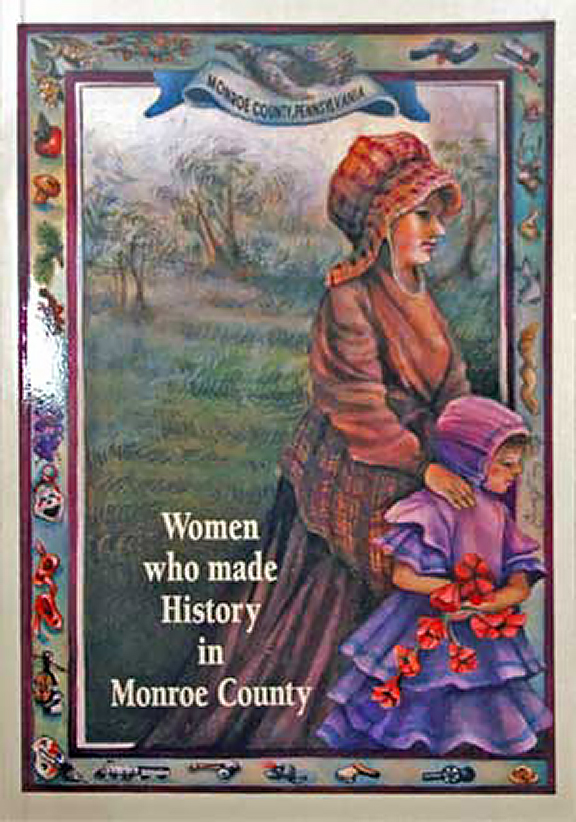
WOMEN WHO MADE HISTORY IN MONROE COUNTY
By Helen G. Brown | 2025 | Paperback 6 x 9 in | 170 pages
Independently Published | ISBN 979-8309889969
"Women Who Made History in Monroe County" by Helen G. Brown is a valuable contribution to regional history that shines a long-overdue spotlight on the women who helped shape Monroe County through education, business, civic leadership, philanthropy, religion, and community service. Rather than focusing solely on nationally known figures, the book emphasizes local women whose everyday efforts strengthened their communities and preserved the county’s cultural identity.
One of the book’s greatest strengths is its preservation of stories that might otherwise have been lost. The author successfully documents the accomplishments of women from varied backgrounds and eras, demonstrating that local history is deeply connected to women’s experiences and contributions. Readers interested in Pennsylvania history, genealogy, women’s studies, or Monroe County heritage will find the work especially meaningful.
The book also serves as an important corrective to traditional historical narratives that often overlooked women’s roles. By compiling biographies, photographs, and historical accounts, the volume creates a richer and more inclusive understanding of Monroe County’s past. Its accessible writing style makes it appealing not only to historians and researchers, but also to general readers and community members.
The book reads more like a commemorative collection than a critical historical analysis. The emphasis is clearly on honoring and remembering these women. However, book club readers noted several women that were surprisingly not included. Perhaps the author felt 338 pages was long enough.
Overall, "Women Who Made History in Monroe County" is an engaging and worthwhile local history resource that preserves the legacy of women whose contributions deserve recognition. It is both informative and inspiring, reminding readers that history is often built through the dedication and perseverance of ordinary people doing extraordinary things within their communities.
More information …
By Helen G. Brown | 2025 | Paperback 6 x 9 in | 170 pages
Independently Published | ISBN 979-8309889969
"Women Who Made History in Monroe County" by Helen G. Brown is a valuable contribution to regional history that shines a long-overdue spotlight on the women who helped shape Monroe County through education, business, civic leadership, philanthropy, religion, and community service. Rather than focusing solely on nationally known figures, the book emphasizes local women whose everyday efforts strengthened their communities and preserved the county’s cultural identity.
One of the book’s greatest strengths is its preservation of stories that might otherwise have been lost. The author successfully documents the accomplishments of women from varied backgrounds and eras, demonstrating that local history is deeply connected to women’s experiences and contributions. Readers interested in Pennsylvania history, genealogy, women’s studies, or Monroe County heritage will find the work especially meaningful.
The book also serves as an important corrective to traditional historical narratives that often overlooked women’s roles. By compiling biographies, photographs, and historical accounts, the volume creates a richer and more inclusive understanding of Monroe County’s past. Its accessible writing style makes it appealing not only to historians and researchers, but also to general readers and community members.
The book reads more like a commemorative collection than a critical historical analysis. The emphasis is clearly on honoring and remembering these women. However, book club readers noted several women that were surprisingly not included. Perhaps the author felt 338 pages was long enough.
Overall, "Women Who Made History in Monroe County" is an engaging and worthwhile local history resource that preserves the legacy of women whose contributions deserve recognition. It is both informative and inspiring, reminding readers that history is often built through the dedication and perseverance of ordinary people doing extraordinary things within their communities.
More information …
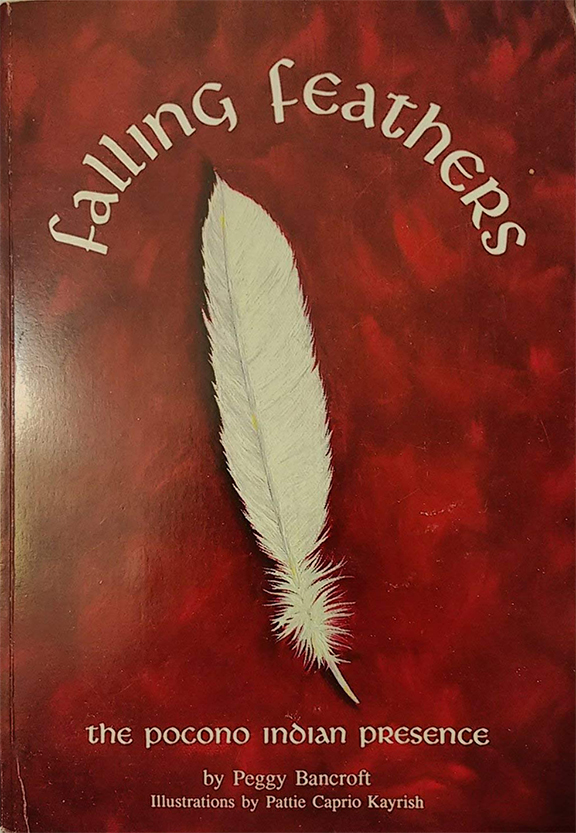
FALLING FEATHERS: THE POCONO INDIAN PRESENCE
By Peggy Bancroft | 1991 | Paperback | 151 pages
Printing Craftsman, Inc. | ASIN B0006EX9ZS
""Falling Feathers: The Pocono Indian Presence" by local author Peggy Bancroft is a fascinating exploration of Native American history and folklore in the Pocono region of northeastern Pennsylvania. First published in 1991, the book combines historical research, oral traditions, legends, and storytelling to illuminate the enduring Indigenous presence in the Poconos.
One of the book’s greatest strengths is Bancroft’s evident passion for regional history. She brings attention to important Native leaders and figures such as Teedyuscung, Cornplanter, and Handsome Lake, weaving their stories into the broader narrative of the Pocono Mountains. The work emphasizes that Native history in Pennsylvania did not simply disappear but remains embedded in the region’s geography, traditions, and memory.
Bancroft writes in a highly accessible and often poetic style, making the book appealing to both casual readers and local history enthusiasts. Rather than presenting a dense academic study, she creates a reflective and atmospheric portrait of the Pocono Indian presence, blending documented history with legend and cultural interpretation. This approach gives the book warmth and personality, especially for readers interested in folklore and regional storytelling.
The book’s regional focus is another major asset. Bancroft preserves stories and traditions that are often overlooked in larger historical works, helping readers better appreciate the Indigenous roots of northeastern Pennsylvania. For residents of the Poconos or those interested in Pennsylvania heritage, the work provides a meaningful connection to the area’s past.
At times, however, the blend of legend, oral tradition, and historical narrative can make it difficult to distinguish between documented fact and interpretive storytelling. Readers seeking a strictly scholarly or heavily footnoted academic history may find the work more commemorative and narrative-driven than analytical. Nonetheless, that accessible style is also part of the book’s charm and enduring local appeal.
Overall, Falling Feathers is an engaging and heartfelt tribute to the Native American heritage of the Pocono region. Peggy Bancroft successfully captures the mystery, history, and cultural memory of the area while encouraging readers to further explore the Indigenous stories woven throughout Pennsylvania’s past. It remains an important contribution to local and regional history.
More information …
By Peggy Bancroft | 1991 | Paperback | 151 pages
Printing Craftsman, Inc. | ASIN B0006EX9ZS
""Falling Feathers: The Pocono Indian Presence" by local author Peggy Bancroft is a fascinating exploration of Native American history and folklore in the Pocono region of northeastern Pennsylvania. First published in 1991, the book combines historical research, oral traditions, legends, and storytelling to illuminate the enduring Indigenous presence in the Poconos.
One of the book’s greatest strengths is Bancroft’s evident passion for regional history. She brings attention to important Native leaders and figures such as Teedyuscung, Cornplanter, and Handsome Lake, weaving their stories into the broader narrative of the Pocono Mountains. The work emphasizes that Native history in Pennsylvania did not simply disappear but remains embedded in the region’s geography, traditions, and memory.
Bancroft writes in a highly accessible and often poetic style, making the book appealing to both casual readers and local history enthusiasts. Rather than presenting a dense academic study, she creates a reflective and atmospheric portrait of the Pocono Indian presence, blending documented history with legend and cultural interpretation. This approach gives the book warmth and personality, especially for readers interested in folklore and regional storytelling.
The book’s regional focus is another major asset. Bancroft preserves stories and traditions that are often overlooked in larger historical works, helping readers better appreciate the Indigenous roots of northeastern Pennsylvania. For residents of the Poconos or those interested in Pennsylvania heritage, the work provides a meaningful connection to the area’s past.
At times, however, the blend of legend, oral tradition, and historical narrative can make it difficult to distinguish between documented fact and interpretive storytelling. Readers seeking a strictly scholarly or heavily footnoted academic history may find the work more commemorative and narrative-driven than analytical. Nonetheless, that accessible style is also part of the book’s charm and enduring local appeal.
Overall, Falling Feathers is an engaging and heartfelt tribute to the Native American heritage of the Pocono region. Peggy Bancroft successfully captures the mystery, history, and cultural memory of the area while encouraging readers to further explore the Indigenous stories woven throughout Pennsylvania’s past. It remains an important contribution to local and regional history.
More information …
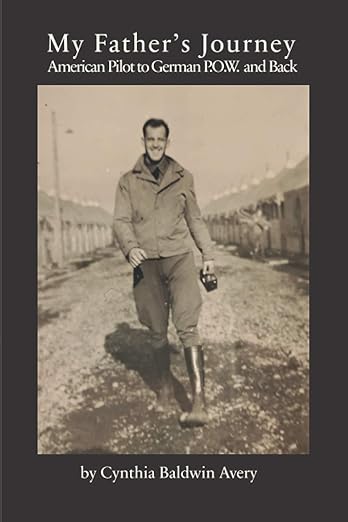
MY FATHER’S JOURNEY: From American Pilot to German POW and Back
By Cynthia Baldwin Avery | 2020 | Paperback 6 x 9 in | 330 pages
Independently Published | ISBN 978-1735872704
Cynthia Baldwin Avery tells the remarkable true story of one man's journey from an idyllic childhood in Aurora, New York, to serving as a World War II pilot in England, and ultimately enduring captivity as a prisoner of war in a desolate camp in German-occupied Poland.
Through triumphs and tragedies, love and loss, Baldwin C. Avery’s life reflects extraordinary courage, resilience, and a lifelong commitment to serving his country and community. His story also illustrates the enduring strength of faith and family in overcoming unimaginable hardships.
Written by Mr. Avery's daughter — and the sister of our HATT treasurer — the book draws upon her father's extensive collection of letters, journals, newspaper clippings, photographs, and memoirs. Carefully weaving these firsthand sources together, she vividly recreates her father's inspiring experiences, preserving an important personal story of World War II for future generations.
More information …
By Cynthia Baldwin Avery | 2020 | Paperback 6 x 9 in | 330 pages
Independently Published | ISBN 978-1735872704
Cynthia Baldwin Avery tells the remarkable true story of one man's journey from an idyllic childhood in Aurora, New York, to serving as a World War II pilot in England, and ultimately enduring captivity as a prisoner of war in a desolate camp in German-occupied Poland.
Through triumphs and tragedies, love and loss, Baldwin C. Avery’s life reflects extraordinary courage, resilience, and a lifelong commitment to serving his country and community. His story also illustrates the enduring strength of faith and family in overcoming unimaginable hardships.
Written by Mr. Avery's daughter — and the sister of our HATT treasurer — the book draws upon her father's extensive collection of letters, journals, newspaper clippings, photographs, and memoirs. Carefully weaving these firsthand sources together, she vividly recreates her father's inspiring experiences, preserving an important personal story of World War II for future generations.
More information …